

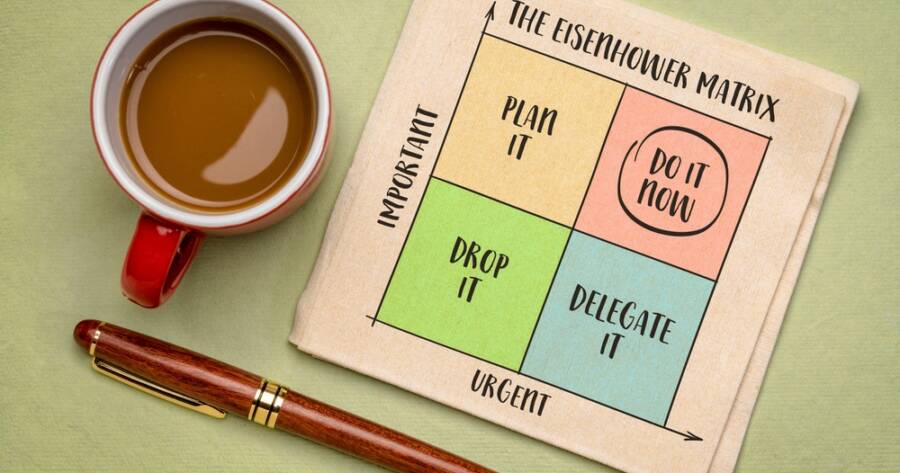
Managing a long list of tasks can quickly become overwhelming, especially when everything feels urgent. Without a clear system, it is easy to focus on the wrong things or spend time reacting instead of planning. The Eisenhower Matrix is a simple method that helps you sort tasks based on urgency and importance. By using the Matrix, you can make better decisions about where to spend your time and improve your daily focus.
What the Eisenhower Matrix Is
The Eisenhower Matrix is a tool that divides tasks into four categories based on two factors: urgency and importance. Urgent tasks require immediate attention, while important tasks contribute to long-term goals.
The matrix is made up of four sections: tasks that are urgent and important, important but not urgent, urgent but not important, and neither urgent nor important. This structure helps you see your workload more clearly and decide what to do next without confusion.
Focus First on Urgent and Important Tasks
Tasks that are both urgent and important should be your top priority. These are the items that need immediate attention and have a direct impact on your work or responsibilities.
Examples might include deadlines, urgent problems, or critical decisions. Handling these tasks first helps prevent issues from growing and keeps your day on track. However, relying too heavily on this category can lead to stress, so it is important to balance it with other areas of the matrix.
Schedule Important but Not Urgent Work
The second category includes tasks that are important but not urgent. These are often related to planning, long-term goals, and personal growth. While they may not require immediate action, they are essential for progress.
Scheduling time for these tasks helps ensure they do not get ignored. For example, activities like planning projects, learning new skills, or improving systems belong in this category. Focusing here can reduce future stress and improve overall results.
Delegate Urgent but Less Important Tasks
Some tasks may feel urgent but are not especially important. These often include interruptions, minor requests, or routine activities that do not require your full attention.
Whenever possible, these tasks can be delegated to others. If delegation is not an option, try to handle them quickly without letting them take over your schedule. Managing this category effectively helps free up time for more meaningful work.
Eliminate or Reduce Low-Value Tasks
The final category includes tasks that are neither urgent nor important. These activities often distract from more productive work and do not contribute to your goals.
Examples might include unnecessary browsing, low-value meetings, or tasks that can be avoided altogether. Reducing or eliminating these activities helps create more time for priorities. Being aware of this category is key to improving efficiency.
How to Build Your Own Matrix
Creating an Eisenhower Matrix is simple. Start by listing all the tasks you need to complete. Then sort each one into the appropriate category based on urgency and importance.
You can draw a simple grid on paper or use a digital tool. The goal is to see your tasks clearly and organize them in a way that makes decision-making easier. This process only takes a few minutes but can save time throughout the day.
Use the Matrix as a Daily Tool
The Eisenhower Matrix works best when used regularly. Reviewing your tasks at the start of the day helps you stay focused and avoid unnecessary distractions.
You can also update the matrix as new tasks come in. This keeps your priorities clear and prevents your list from becoming overwhelming. Using the matrix daily turns it into a habit that supports better time management.
Avoid Common Prioritization Mistakes
One common mistake is treating every task as urgent. This can lead to constant pressure and poor decision-making. The matrix helps you step back and evaluate tasks more objectively.
Another issue is neglecting important but not urgent tasks. These are often the most valuable but easiest to postpone. Making time for them consistently can lead to better long-term results.
Keep Your System Simple and Clear
The Eisenhower Matrix is effective because it is simple. There is no need to overcomplicate it with too many categories or details. A clear and straightforward system is easier to use and maintain.
Focus on the basic structure and apply it consistently. Over time, this method becomes a natural part of how you manage your tasks and priorities.
A Clearer Way to Manage Your Time
The Eisenhower Matrix provides a practical way to organize tasks and improve focus. By separating urgency from importance, it helps you make better decisions about where to spend your time.
The key is to use it consistently and keep your approach simple. With regular use, this method can reduce stress, improve productivity, and help you stay focused on what truly matters each day.