

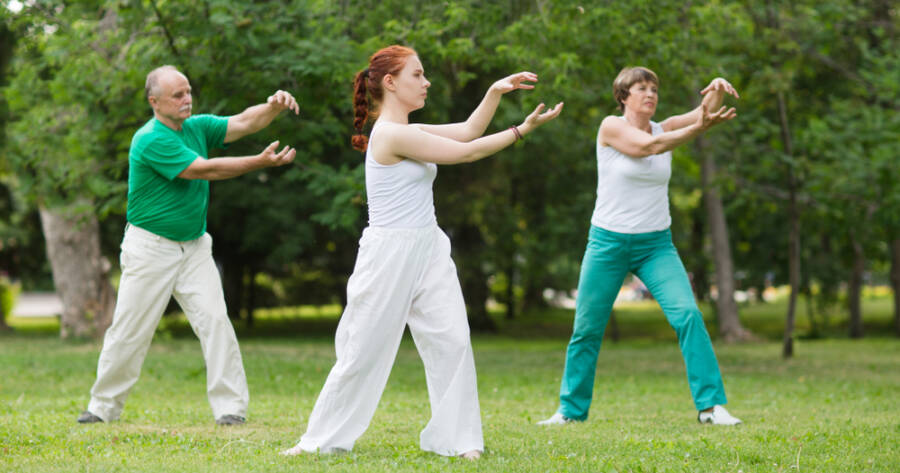
Tai Chi and Qi Gong are gentle movement practices that combine slow motions, controlled breathing, and focused attention. While they have roots in traditional Chinese culture, they are now widely practiced in the United States as simple ways to support physical and mental well-being. Key exercises do not require special equipment and can be adapted for different fitness levels. By practicing regularly, many people find it easier to relax, move comfortably, and maintain a balanced daily routine.
Understanding Tai Chi and Qi Gong
Tai Chi and Qi Gong share similar principles but are practiced in slightly different ways. Tai Chi is often performed as a sequence of flowing movements, sometimes called a form. Each movement connects to the next, creating a smooth and continuous routine.
Qi Gong, on the other hand, focuses on simpler, repeated movements combined with breathing exercises. It is often easier for beginners to learn because the motions are less complex. Both practices emphasize slow, controlled movement and awareness, which makes them accessible to people of all ages.
Improving Balance and Mobility
One of the most noticeable benefits of Tai Chi and Qi Gong is improved balance. The slow, steady movements help strengthen muscles and improve coordination. This can be especially helpful for older adults or anyone looking to reduce the risk of falls.
These practices also support better mobility. Gentle stretching and controlled movement can help loosen stiff joints and improve flexibility over time. Because the exercises are low-impact, they are suitable for people who may not be comfortable with more intense workouts.
Supporting Stress Reduction and Relaxation
Tai Chi and Qi Gong are often used as tools for managing stress. The combination of slow movement and steady breathing helps calm the mind and reduce tension in the body.
Focusing on each movement encourages a sense of mindfulness, which can make it easier to step away from daily worries. Over time, this can lead to a more relaxed state and improved ability to handle stress. Many people use these practices as part of a daily routine to reset and recharge.
Encouraging Better Breathing Habits
Breathing plays a central role in both Tai Chi and Qi Gong. Each movement is paired with controlled, steady breathing, which helps improve awareness of how you breathe throughout the day.
This focus can lead to deeper and more consistent breathing patterns. Better breathing supports overall comfort and can help you feel more relaxed. It also encourages a stronger connection between the body and mind, which is a key part of both practices.
Building Strength Without Strain
Although Tai Chi and Qi Gong may appear gentle, they still help build strength. Holding positions and moving slowly requires muscle control, especially in the legs and core.
This type of strength building is different from high-impact exercise. It focuses on stability and control rather than intensity. As a result, it is easier on the joints and can be practiced regularly without causing strain or fatigue.
Supporting Mental Focus and Awareness
Both practices encourage you to stay present and focused. Paying attention to each movement helps improve concentration and mental clarity.
This kind of focus can carry over into other parts of your day. Many people find that regular practice helps them think more clearly and stay more organized. The combination of movement and attention creates a simple but effective way to support mental well-being.
Easy to Start and Maintain
One of the advantages of Tai Chi and Qi Gong is how easy they are to begin. You do not need special equipment or a large space. Many routines can be practiced at home or outdoors.
Short sessions can still be effective, which makes it easier to fit them into a daily schedule. As you become more familiar with the movements, you can gradually increase the length of your practice. This flexibility helps make the habit easier to maintain over time.
Suitable for a Wide Range of People
Tai Chi and Qi Gong can be adapted to different fitness levels and physical conditions. The low-impact nature of these exercises makes them accessible to beginners as well as those looking for a gentle form of activity.
Because the movements can be adjusted, they are often used by people recovering from injury or looking for a less intense way to stay active. This adaptability makes them a practical option for many individuals.
A Simple Path to Better Balance and Calm
Tai Chi and Qi Gong offer a practical way to support both physical and mental well-being. Through gentle movement, controlled breathing, and focused attention, these practices help improve balance, reduce stress, and build strength over time.
The key is consistency rather than intensity. Even a few minutes each day can lead to noticeable benefits. By making these practices part of your routine, you can create a simple and sustainable way to feel more balanced, relaxed, and in control of your overall health.