

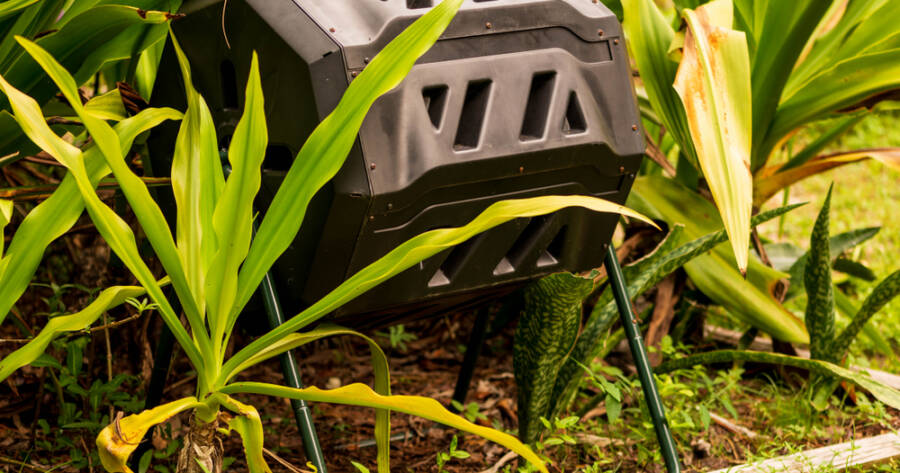
If you’ve ever tossed a banana peel or coffee grounds into the trash and wondered if there was a better way, a compost tumbler might be exactly what you need. A simple tool makes it easy to turn everyday kitchen scraps into something useful for your yard and garden. Whether you have a large outdoor space or just a small corner to work with, a compost tumbler can help you handle food waste in a cleaner, faster, and far more manageable way.
What Is a Compost Tumbler?
A compost tumbler is a closed drum or container that can be spun or rotated to mix its contents. Unlike an open compost pile in the backyard, a tumbler keeps all of your food scraps and yard trimmings neatly inside while still allowing them to break down naturally. The spinning action is what sets tumblers apart from traditional composting setups — it mixes the materials together and lets fresh air in, which helps the whole process along (source).
Composting itself is a natural process in which tiny living things, called microorganisms, break down organic materials like fruit and vegetable scraps, grass clippings, and dry leaves into a rich, dark mixture called compost (source). Tumblers make this process much easier to manage by giving you a self-contained system right in your backyard. Instead of digging and turning a heavy pile with a pitchfork, all you have to do is spin the drum every few days.
Why Keeping Food Scraps Out of the Trash Matters
Most people don’t give much thought to throwing food scraps in the garbage. But once food waste ends up in a landfill, it breaks down very differently than it does in a compost bin. Because landfills are packed tightly and cut off from air, food decomposes without oxygen — and that process releases methane, a powerful greenhouse gas that contributes to climate change (source).
The scale of this problem is significant. Landfills that hold everyday household garbage rank as the third-largest source of human-caused methane emissions in the United States (source). Food waste alone makes up roughly 24 percent of the material going into those landfills, and because food decays so quickly, it produces more methane than any other type of material found there (source). Choosing to compost kitchen scraps rather than throwing them away is one of the most straightforward actions a household can take to help reduce this kind of pollution.
How a Compost Tumbler Makes the Whole Process Easier
One of the biggest reasons people avoid composting is that it can feel messy or hard to keep up with. A compost tumbler solves many of those problems at once. It holds everything inside a closed container, which means no scattered food scraps, no open mounds of decomposing material, and much less chance for pests or animals to get into your waste (source). The sealed design also does a better job of keeping odors under control compared to an open pile.
Beyond the cleanliness factor, tumblers can also speed things up considerably. In a traditional backyard pile, getting finished compost can take anywhere from a few months to well over a year if the pile is left unattended (source). With a tumbler, regularly spinning the drum mixes your materials with oxygen and keeps the breakdown process moving much faster (source). A well-managed tumbler can turn a batch of kitchen scraps and yard waste into finished compost in a fraction of the time it would take without one.
Tips for Getting the Best Results
Getting good results from a compost tumbler doesn’t take a lot of effort, but a few simple habits make a real difference. The most important thing is loading your tumbler with the right mix of materials. Tumblers tend to work best when filled with a greater share of nitrogen-rich “green” materials — such as fresh grass clippings or vegetable scraps — and a smaller portion of carbon-rich “brown” materials like dry leaves or shredded cardboard (source).
You’ll also want to turn the tumbler on a regular schedule, but not so often that you prevent heat from building up inside. Spinning it roughly every five days gives the materials enough time to warm up, which is what drives the breakdown process (source). It also helps to chop or tear food scraps into smaller pieces before adding them, since smaller bits decompose faster by giving microorganisms more surface area to work on (source). Once your tumbler is full, resist the urge to keep adding new scraps — it’s better to let the current batch finish before reloading.
From Scraps to Something Useful: Making the Most of Your Compost
When your compost is ready, you’ll notice it looks dark, crumbly, and loose — a lot like rich garden soil — and has a clean, earthy smell. At that point, it’s ready to use across your yard in several different ways. You can mix it into garden beds, work it into soil around trees and shrubs, spread it over your lawn, or blend it with potting soil for containers and window boxes (source).
The benefits of adding compost to your soil go well beyond feeding plants. It helps soil hold onto moisture, which can cut down on how much you need to water during dry stretches. It also reduces your need for store-bought fertilizers, helps prevent soil erosion, and even helps the soil store carbon rather than releasing it into the air (source). The kitchen scraps that once went straight into the trash can become a steady supply of something that actively improves your yard season after season.
Start Small, See Real Results
A compost tumbler is one of the easiest ways to take a meaningful step toward reducing household waste. It doesn’t require a large yard, a lot of time, or any special skills — just a willingness to give it a try.
Diverting food scraps from the landfill and turning them into something your garden can actually use is a win on every level. For anyone looking to build a more sustainable routine at home, a compost tumbler is a practical, rewarding place to start.